2010年10月13日水曜日

What Color Is Your Paradise?

click to enlarge image

Okay, I suppose it's possible that the reason I am not as happy, rich, famous and world renowned as I could be is that I didn't read "The Secret", the blockbuster bestseller that proved the effectiveness of "The Law of Attraction" for one Rhonda Byne, the author who "magnetized" millions of happiness seekers as purchasers of her book and DVD, by first "giving intent" that Oprah Winfrey would do that thing she does, which is turn self help authors into overnight sensations, such being the "manifestation" power of the Big O.


On the other hand, I DID read a book that, from what I can tell, is nearly identical to it, which came out about ten years earlier than "The Secret". That book was titled, "Excuse Me, Your Life is Waiting!", and it also sold quite well. In it, author Lynn Grabhorn makes the same points that Ms. Byne makes; essentially, everything we could ever desire, including, say, a European sports car right down to make, model and color, is there for the taking if we just feel strongly enough about having it. According to both books, the all important tool to use is "The Law of Attraction", an aspect of this universe that simply can't refuse us anything we want, provided we are so attuned with our desire for it that we have no doubts whatsoever about its arrival, and are able therefore to experience it as if we already have it; in other words, feel it into being.


Well, it seems pretty obvious that this "secret" doesn't work as well as advertised, because if it did, we wouldn't need to have these books pop up in stores every ten years or so, would we? And certainly, no one who bought Ms. Grabhorn's book would have needed to buy the Byne one, right? But, you want to bet some did? Yet there is  an even more glaringly obvious fact of life that makes it clear that there is more to fulfilling our desires than what the two books teach. That being, and correct me if I'm wrong about this, babies don't simply dematerialize their restrainers and fly over to the toy they want to play with. I mean, babies? Certainly they don't have the "negative mindset", the "poverty consciousness" that messes up the smooth functioning of the Law of Attraction for us neurotic adults, do they?  They just got here! If anybody knows how to "feel" strongly enough, it's a baby. He sees that toy, and it's the only thing in the room, in the universe, for him. His eyes light up, his hand reaches out, and then somehow, unfathomably, his hand fails to grasp the longed-for object. Hey, no problem for the baby. He'll just make everything between him and the object disappear, grab the sucker, and then.....still doesn't happen! Now it's time for the poverty consciousness to kick in. The baby wails like life has no meaning, as he sits trapped in his high chair. Poor dear! What could have possibly gone wrong?


Well, it could mean that there IS no "law of attraction". In the first place, calling it a "law"; what is that? Is that meant to make it sound like some scientifically demonstrable universal phenomenon like gravity? Was it called a "law" just because that makes it easier for self help gurus to deceive the gullible?  On the other hand, it could also mean that there is some truth to be found there, that our life experiences do, in fact, tend to mirror our outlook on life, at least in certain ways, but that the authors have just overstated its power. We all know some glass half full types, and glass half empty types. Give each type the same boss, and for the latter, they end up wondering why they "ALLLways have to take orders from such assholes!", while the former often ends up winning the boss over and getting a promotion. On yet another hand (which I am magically manifesting now using this all-powerful tool), it could be something far more, to me, wonderful and mysterious that is happening. And that is that this universe is very complex, and we humans are very complex as well. At any time within our consciousness, all sorts of ideas, memories, patterns, images, etc.  are at play within us as we go through each moment of life. We can't reduce ourselves, the universe, or the results that we experience in our lives to simplistic formulas that fit into a paragraph of gushing, exclamation point-laden prose from a self help author. Would we really want to? Would we want either ourselves, or the universe, to be so flat, so one dimensional? Even if we managed to manifest a Ferrari for each day of the week, would that kind of basic, yes/no, ones and zeroes universe, completely lacking in nuance (both authors liken it to a copy machine) suit our souls?


~~~~~~~~~~~~~~~~~~~~~~~~~


But then, who am I to judge success? In the New Age world of the self-help movement, a bestseller bestows a great deal of credibility on its author. Since the purpose that compels people to purchase such books is to achieve more in life, the fact that someone does just that, by writing a book and becoming rich and famous, makes them, de facto, a person to be emulated and listened to. A guru. And then, the bonanza begins. The tapes you can listen to in your car.  The workshops and seminars and DVDs.  The crowded auditoriums from Fresno to Jacksonville to Melbourne. The overpriced cruise ship tours to Mykonos and Hawaii in the company of the teacher. As the success trajectory shoots upward, the authors can begin to start wearing white all the time, to have beatific photos of themselves doctored to make it look like they have halos. They must appear to be happy at all times, enlightened beings who show the rest of us how far we still have to go. Their critics can be easily dismissed as being "negative", "not ready to heal" and "still under the spell of poverty consciousness". Poor things, stuck in kindergarten while the newly wise followers of their rich, famous,newly-minted guru prepare to graduate to a form of existence where only benevolence prevails.


And here's the thing. In the New Age, you can write the most outlandish things in order to get that book up there in the Oprahsphere, and hence up the New York Times chart. Because we're talking about, you know, the Universe, it can pay (literally, and handsomely) for the claim to be as outlandish as you can make it. For example, you can claim, as Neale Donald Walsh did, that lil' ol' you had a conversation (actually a whole bunch of conversations) with God! His Conversations With God series has sold tens of millions of copies and been translated into dozens of languages. Mr. Walsh, with his long flowing white beard and impeccably white robes, was obviously so impressed with his conversation partner that he decided to copy His fashion sense! Or, you can claim, as one Gary Renard did in his bestseller, The Disappearance of the Universe, that two attractive "Ascended Masters", one male and one female, just happened to appear in your living room one day, from the future no less, to share with you cosmic wisdom, along with instructions to share it with the remainder of humanity that doesn't  have beings from the future materialize in their living rooms on a regular basis. Maybe they liked his CD collection?


But even those claims fall well short, on the hubris meter, of what I consider to be the most outlandish claims I have ever encountered from any author (I've forgotten his name), in any book, (the title of which escapes me). His book didn't go on to become a bestseller, but I can assure you he was none too disappointed about that. Because, you see, according to the book, this individual has had many incarnations on this earth plane, and was always a king and a leader, even the founder of religions. In order to be coaxed, grudgingly, by his Spirit Guides to incarnate just one more time (this current life) he accepted, on the condition that he "[wouldn't] be worshipped again!" I kid you not. The only other thing I remember about the book (interesting how little of its actual content stayed with me) is a passage that describes him visiting a psychic of considerable power. As she read his energy field, she became increasingly astonished at just who was sitting in front of her, thinking perhaps he may have been one of the Twelve Apostles, and then finally exclaiming to an onlooker that - wait for it - "this guy taught Jesus!"


Such extravagant claims for oneself is an area where the New Age excels, and it is not simply because its adherents are gullible, foolish, and easily misled, although that certainly figures into the equation. More significantly, it is that the New Age is a unique field of human experience, one where the goal is to be as "high" as possible. People who delve into it are seeking, above all else, enlightenment. And it doesn't help to have a lot of "judgment" and "negativity" floating around in your head if that is your goal. New Age authors and teachers are thus able to make use of a loophole that nearly all their followers would, a bit red-facedly, admit to, regardless of how intelligent and thoughtful they are. They want to believe in a world where something as extraordinary and desirable as their own enlightenment is possible; they want to be able to do things with their own minds, and experience things in their own reality that, if not as hard to believe as the claims of the teachers, are nevertheless far outside of our everyday world of frustrations, disappointments and heartbreaks. If they, the followers, feel that being positive, non-judgmental, accepting, etc. is going to put them in the right energetic space to receive the teacher's messages and move closer to that goal of enlightenment, whereas being "negative"; i.e., using their critical thinking skills and God-given bullshit detector, will only serve to keep them stuck in their unenlightened condition, they will feel an internal pressure to choose to approach the material with the former attitude. Suspension of disbelief never had a higher incentive!


Now, it would be all too easy at this point to clutch one's Richard Dawkins and Carl Sagan books close to one's chest and say that the whole New Age deal is just one enormous mountain of hokum. That it only exists because certain "memes" about the nature of reality have hardwired themselves into our awareness since long before the Scientific Method was ever developed, and that some very flaky folks with loads of ambition and no problems stretching the truth have decided to exploit those memes for maximum profit and self-aggrandizement. I can certainly understand why people would hold this view. But I, personally, will not go there.


Because despite all the flimflam, all the grandiose claims, all the marketing excess and fallen heroes of the New Age movement (including Rhonda Bynes, who has been sued by some of her earliest collaborators on "The Secret" for not paying  what she owes them), I am convinced, as I am of anything in this world, that the existence of the New Age "movement" (and it should be said that nobody involved in it really thinks of it as such) is attributable not  merely to human gullibility. Rather, it has emerged from mankind's eons-long associations with some very real aspects of this universe, and very powerful ones. I think that people do themselves a disservice, and pay a price for it, either by attempting to turn these universal forces into a hyped-up, dumbed down industry, or by denying them altogether as unscientific woo woo.


~~~~~~~~~~~~~~~~~~~~~~~~~


If you live in a fairly large city, and you spend any time exploring the New Age community there, you will meet some truly exceptional people. Well educated, intelligent, clear minded, open hearted, fit and youthful, hardly conforming to the stereotype of suckers lining up to buy the latest snake oil. Furthermore, you may note that they are not at all defensive about the low regard with which they are held by the scoffing, science minded, "rational" types whose views adhere to Dawkins and his ilk, and are convinced we are living in an essentially stupid, dead and mechanistic universe. If anything, they are bemused; certainly you won't hear the vitriol that comes from the other side, the pejoratives such as "whack-job", "nutter", "loony", etc. Indeed, one reason for the lack of animosity will be that many of them, perhaps even most of them, have been in a similar state of mind at some point in their lives. Having seen through the baloney of their childhood religions, they went through a period of questioning, doubt and agnosticism that those who scoff at them still inhabit. When one can look at one's own history and recognize that ten or twenty or thirty years ago, one was in precisely the same position as the scoffers, it is hard to feel overly sensitive, or needlessly retaliatory. 


Some among the people you encounter will be practitioners who have trained in, and offer services in, such esoteric "healing modalities" as reiki, psychic reading, feng shui, acupuncture, hypnotherapy, shamanism, channeling, past life trauma work, Rolfing, tarot, crystal, etc., etc. You will hear from people you talk to that some of these healers have extraordinary skills or talents. They may have the ability to see auras, for example, or have experienced numerous out-of-body experiences, and so on (indeed, one of the reasons that New Agers are receptive to the outlandish claims of the megastars of the field is that even in their own circles there are people they admire and trust who have some pretty amazing experiences to tell of). Furthermore, many of these teachers will have achieved a considerable reputation, at least at the local level, and have a following of people who can testify that without question their lives have improved immeasurably by working with them. They wouldn't be paying large, sometimes very large, sums of money for the workshops, one-on-one sessions and so forth unless they were experiencing tangible results. Furthermore, those who visit the teachers and healers are themselves not just spiritual wannabes. Many of them will also have experienced (as I have) truly extraordinary, transformative, revelatory experiences, the kinds which are far too lightly dismissed by science-minded atheists who consider all such things delusional nonsense. 


So it's not that there's no there there. There is.  The problem lies in how, in our commerce-driven world, even the mysteries and powers of the universe end up being corralled into a moneymaking "industry" that doesn't always benefit those who get caught up in it. As someone who has spent a fair amount of time exploring the New Age, I have come to the conclusion that it is indeed very problematic when The Big Questions become Big Business.


We all gotta make a living. That's the way the world is set up, isn't it? But when one has "been to the mountaintop" (i.e., had a numinous experience of some kind), it can seem like a real drag to go on working the same boring job, and continuing to share office space with folks who "just don't get it". It can easily cause you to lose your high. When a spiritual awakening occurs, it doesn't simply find a nice little place to inhabit in the back of your mind. Spiritual awakenings are powerful things, and don't comfortably settle into your consciousness; they tend to blast all the doors and windows open and tear up the lawn! They quickly become the most important thing in your life, and your goal becomes staying in that energy, and moving it forward as much and as quickly as possible. This is not some small, egotistical thing. It is in fact very analogous to the sexual awakening that young people experience, when all of a sudden, family, jobs, studies, etc. fade to insignificance as one's attention fixates almost exclusively on this new, immensely powerful energy in one's life.


It is only natural that when this happens, many people feel a strong urge to change their jobs, to make their work about spirituality and healing, so that they can spend the majority of their time in that energy, commingle with like minded people, and give something valuable of themselves to the world and the universe. This should not be looked down upon as mere vanity or delusion. This is both an appropriate response to the transformation one has experienced and a clear indication that the spiritual energy has begun to put down roots in one's consciousness.


And that's where the problems occur. Because ours is not a society that has the slightest notion what to do about spiritual awakenings. We've barely managed to deal with sexual awakenings! Consequently, all too often what happens is one decides to get "certified" in some special esoteric field so that one can then begin to charge a fee for services of some kind. In some cases, this is a very good thing. There are many reputable schools of alternative healing therapies, any number of really good teachers out there, and lots of genuine healing happening in this world as a result. But there is also a lot of what can only charitably be called dubious in content. There are courses being offered in all sorts of "energies", "mastery courses", courses that teach you how to become a channeler, etc, etc. Often as not, and this should throw up a red flag for anyone, the courses become increasingly more expensive as you move up the ladder and attain different levels of certification, so that you can ultimately go on to become a teacher yourself. This "certification" process has become downright silly. I know of a person who developed a very unique and quite wonderful spiritual dance and movement program, and subsequently started up a "certification course" when she herself had only been doing it for a few years and had only a small following. I'm sure she figured, "hey, why not? It's my program, so I can choose my own way of certifying that others are able to begin teaching it, right?" Well, actually, no. For certification to have any meaning, it clearly must be administered by a body that consists of more than just one person,  and it must involve a discipline that has been well observed and tested, by numerous practitioners, and over a number of years. 


But at least she wasn't selling enlightenment! Seriously, that's what some of these courses do. As you move through their various esoteric courses, each revealing an even more wondrous and mysterious power that the universe withholds from all but a select few, each costing many hundreds, or even thousands of dollars (because, hey, the universe needs to eat too, right?) you will become a "master". Well, whoop de do! While some people blow twenty grand on something  as silly and material as a car, you just went and purchased yourself the same status as the people in the old dusty books! All you need is to go out and find some apostles!


As a result, in the New Age movement, there are thousands of "masters", anywhere from their late twenties to early forties, certified, set up, offering their services, and (at least many of them) working with some very real and powerful energies, and passing these on to paying customers. In a more enlightened society, with a saner approach to the numinous, these young and middle aged people would still be apprentices. They would still be spending years of their lives in discipleship to a true master, who would demonstrate to them as clearly as possible that what they are working with is not something to take lightly, nor to pass on to those who are not able to handle it. There can be consequences, really devastating ones. Furthermore, the work shouldn't essentially be about helping others, to begin with. It should be about self mastery, and then, as a result of that, if one happens to be graced with some healing powers, then these can be offered discriminately, and under the teacher's tutelage. One has to be absolutely clear about one's motivation for becoming a healer, as there is a lot of glamour involved in that term and it is very easy for the ego to reduce one's work to a caricature of true spiritual practice. What is required more than anything is patience, and patience is the first casualty of our crazy, money-centered world.


~~~~~~~~~~~~~~~~~~~~~~~~~


Several years ago, I experienced a personal tragedy, the suicide of someone I'd known my whole life. This happened in January, shortly after the Indian Ocean tsunami that had wiped out whole villages, and caused the death of upwards of 200,000 people. Those two events, coming so soon one after the other, affected me very strongly, and as a result I was at a very low point in my life. I had been a spiritual practitioner for many years, mostly meditating, but having also participated in various spiritual study groups. I had many friends who were engaged in various esoteric practices. During a get-together at the house of one of these friends, a very lovely, deeply spiritual, woman in her mid-thirties announced that she had something to offer anyone there who was interested. She had just returned from an ashram in India, and while there, had studied with a renowned guru. He had passed on a powerful healing energy to her, and explained that she would be able to pass it through her to others. She had experienced this energy as very beautiful and very healing, and wished for those of us who were willing to experience it as well. Feeling that I needed something to help me shake my blues, I gratefully accepted her offer.


I got into a meditative pose, perched upon a stool, and she held her hand near me as I sat there, eyes closed. Almost immediately, I began to go into a deep trance. I experienced an incredibly blissful energy moving through me. I felt as if I could have stayed there forever. I was aware, vaguely, of all that was going on around me, such as snippets of conversation and so on, but my overriding state was one of absolute bliss that seemed to get deeper and deeper the longer I stayed in it. There was no desire on my part to move myself out of it, so I let my body go stiff as a statue, in that precarious perch on the stool. Other people also received the energy, but no one in the room experienced it as powerfully as I did. Perhaps no one else welcomed it in as deeply as I, because it had been a long time since I had even felt good, much less blissful. Eventually, after perhaps an hour, I had to be nudged, gradually, out of that trance so that I could return to the world of the here and now.


What followed in the subsequent days and weeks was not as wonderful as the feeling that I had experienced that day. Soon afterwards, I began to feel quite strange. My identity seemed to grow more and more precarious. I felt sometimes like I was losing my mind, at other times that I was hollowing out somehow, perhaps even losing my soul. I couldn't explain these feelings to anyone, and tried to hide what was happening. To make a long story short, eventually I fell into a deep and hellish depression. Only after about six months, and after finding the right type of traditional medication, was I able to recover, slowly and agonizingly. 


Now, I can't say for sure what influence, if any, my experience at the party had on the events that followed. Human psychology is very complex, and I am sure that a mixture of many things, most certainly the personal tragedy, the entry into middle age I was experiencing, different problems with work and relationships, etc. contributed to the depression. Furthermore, I cannot say that even if that energy had played a role, that that was necessarily a bad thing, considering my life as a whole. As difficult as that period was, as I recovered new talents and personal qualities began to emerge, seemingly out of nowhere. Before my depression, I couldn't have imagined writing these "visual essays", for example. I am happier now than I have ever been at any time in my life, and it is possible that going through that dark period was exactly what my soul required in order to grow and ripen. Nevertheless, on that day I possessed neither the wisdom nor discernment to know if accepting that very powerful energy at such a vulnerable time in my life was the right choice. I don't think the lady who passed it on to me did either. Without question, her intention was purely altruistic. She simply wanted to freely share something beautiful with her friends, no strings attached. But there was no warning that I may be biting off more than I could chew, either.


I feel this episode reveals that much of what is referred to as the "New Age" is rooted in things that are indeed very powerful, and must be treated with great care and respect. They are not something to be packaged in bright, appealing colors or passed around like a new cake recipe. We occupy a precarious place in the universe, the nature of which we ourselves are quite uncertain about. It is unwise to cavalierly experiment with energies that have been here since before our ancestors wiggled out of their prehistoric lakes and rivers, or to audaciously attempt to fit them into our monetary system and reduce them to mere products to be sold. "The Secret" may be over-hyped nonsense, but The Great Mystery is something else entirely.


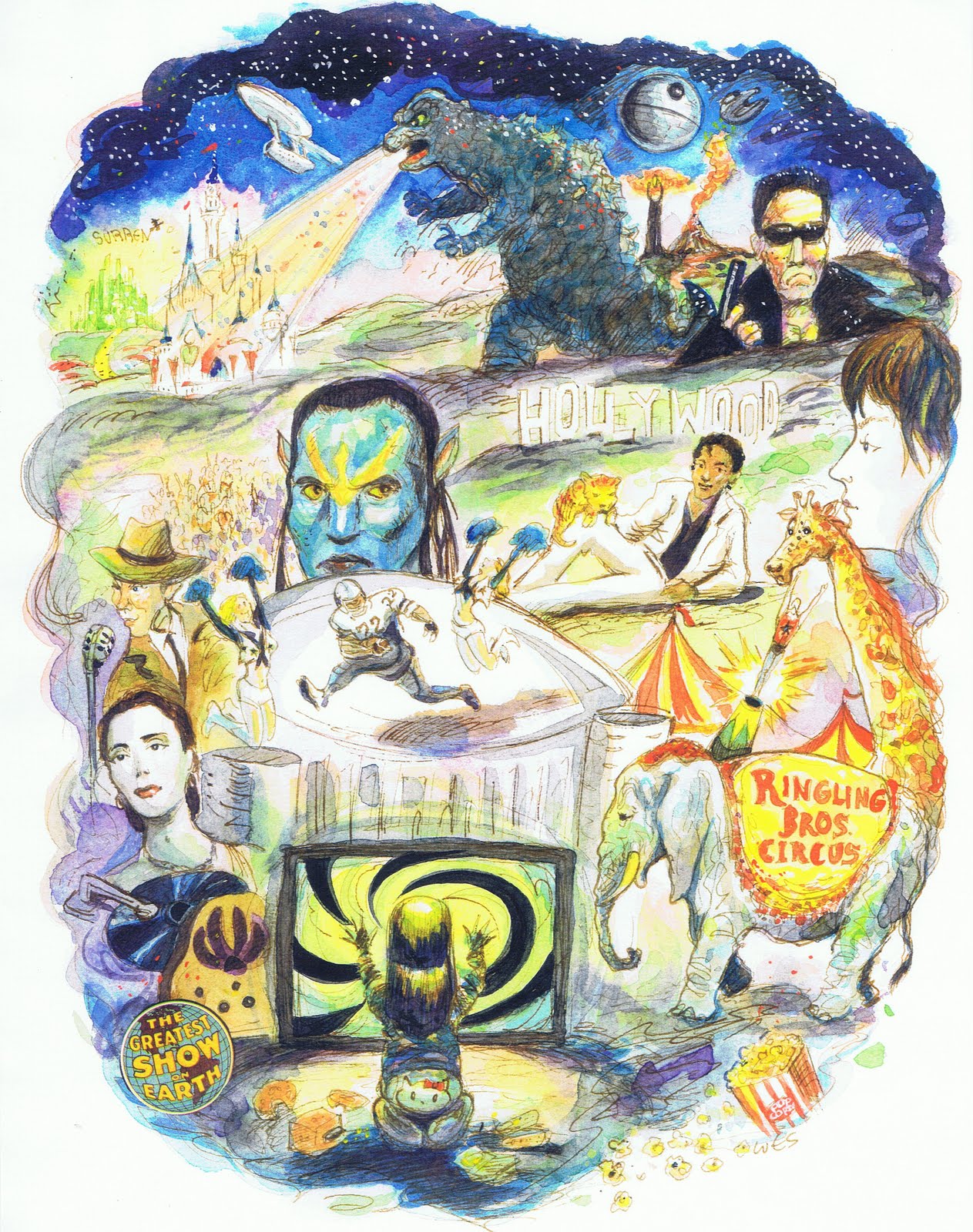
2010年9月30日木曜日

Kings and Queens


I am excited to be showing a group of eight of my earlier works, the majority acrylic, with one graphite and one pastel, for a month (October 15th to November 15th) at a great restaurant near ever popular, unabashedly upscale, Roppongi Hills. The restaurant is called Roti, and the Maestress Of Ceremonies is Lauren Shannon : writer, activist, chef, curator, teacher, and probably the busiest person in Tokyo! 
Here is what I wrote about the show for the postcard announcement ( the images shown above are the ones that will appear on it):

The show is called "Kings and Queens", as that is a subject that has long interested me. Whether it be playing cards, fairy tales, medieval tapestries, stained glass, etc. (the influence of all can be seen in this work) these archetypes touch me very deeply. They are not meant to represent worldly  "power over", but rather "power within", as I think that human life is foremost about attaining a higher level of being, and in that sense the royalty and mastery of a king or a queen are personal qualities within us that we should seek to cultivate, and that I wish these paintings to evoke.


2010年9月19日日曜日

Selling Gingerbread


Here we are now, entertain us!

- Nirvana, "Smells Like Teen Spirit"


Just look at Bob and Judy, they're happy as can be

inventing situations, putting them on TV

- Talking Heads, "Found A Job"


   About six weeks ago, the world was introduced to its newest superstars. 33 Chilean miners, who would otherwise have passed their entire lives unknown to anyone other than their neighbors and family members (and really, is that so bad?), became trapped in a precious metals mine in the northern part of the country, and instantly became world news. With horror, we learned that the miners were stranded 3 miles below the surface of the earth, and would remain so for anywhere from three to six months. The story, that the world's media purveyors rushed to report on, had it all: heroes - the miners themselves; villains - the heads of the mine company, Empressa Minera San Esteban, which has a shoddy safety record that has resulted in earlier tragedies; suspense, drama, and a setting right out of our scariest nightmares. The world's attention has since moved on, of course, as is its way, although the story of the miners and their ongoing ordeal continues to make headlines in Chile and throughout portions of Latin America. But when their story first made its way onto the airwaves as the-thing-you're-supposed-to-be-fascinated-by-today, and millions of people fixed their attention on it, received updates from breathless reporters and anchormen and women, and contemplated the unimaginable hardship being endured by the new TV stars, I cannot help but muse, ironically, that the thought occurred to many of them, "six months without television? How will they survive?"


   In the midst of the real life drama of the miners, the media had an even more compelling subject to consider - itself. Yes, the 62nd Annual Emmy Awards Ceremony was held with much fanfare, as television, for a brief, but yearly, sliver of time had nothing better to entertain us with than its own greatness. Again, audiences had their heroes and villains, along with suspense that reached a crescendo as millions quivered in their chairs awaiting the news that their favorite celebrities, such as Alec Baldwin of 30 Rock,  and programs such as Mad Men, had prevailed against worthy, or unworthy, adversaries. With the unearned pride that only a fan can understand, they watched their beaming heroes head for the stage to grab that slender little gold plated angel holding the world, or an atom, or whatever that thing is she's holding, and hoist her proudly into the air. The case of Mad Men, and 30 Rock, are particularly revealing. These are shows about mass media. When one chooses to spend a night of one's life being entertained by rooting for an entertainment program about entertainment,then one is being meta-entertained. And no, I do not think this is a good thing.


   As a continually evolving species, perhaps we should now be referred to as "Homo Entertainus". Entertainment, for many, has quite literally become the most important thing in life. I doubt many readers would argue this. I bet we all know at least someone, an elderly aunt or parent perhaps, who turns on the tube first thing in the morning and basically leaves it on until it's time to sleep, to finally give their brains a brief respite from its spell. Their daily schedule revolves around what time shows come on. The only things they seem to enjoy talking about are the programs they watched recently. In all of the long march of human evolution, people like them would have been unthinkable, even unimaginable, up until a very recent period in our history. This is not to put them down, necessarily. I fully understand that for those who are elderly and alone, perhaps unable to get around much, the television and its offerings are nothing less than a savior. I'm just pointing out that, for well over 99% of our existence as a species, such a lifestyle was neither possible nor desirable.


   We are vastly, grotesquely over-entertained, no less so than we are overfed, as a nation. Our Ipods are filled with thousands of songs, our computer's memory is filled with movies, TV shows and sports events, our conversations have become flabby with limitless commenting on films, sitcoms, albums, games, etc. It has become such a large part of our lives that we have ceased to ask, if indeed we ever did, what is the point of all this entertainment? How could it possibly have come to play such a large role in our lives? What does it give us that we can't get in some other way? From our own lives, not fantasies?


   It's been a long road getting here. Perhaps the modern age of entertainment has as its beginning a date in late 1902, when Enrico Caruso's angelic voice was recorded and made available for distribution. For the first time in history, the world's greatest opera singer could be listened to and appraised without traveling to the theater to see him perform. In that instance, every local singer and musician, from opera diva to Mississippi bluesman, was put on notice. The competition just got stiffer, pal. From now on, you're competing against the best the world has to offer.


   Plato, surely one of the greatest thinkers who ever lived, put a lot of thought into the value of art and entertainment. One shudders to think what he would make of the world we live in today. It is like his Republic turned upside down, particularly in terms of entertainment. In his ideal society, plays, musical performances, poetry and pictorial arts were to be strictly censored. They were to show "only the good". Those who created them were to be placed in special colonies outside the metropolis, as their very presence among regular folk was potentially corrupting. Why? First of all, because the very nature of art, as a representation of something, whether an event or a flower, was a further diminishment of the real, the ideal world beyond from which this one arises. A painting of a flower was thus a further removal from reality than the flower itself. Looking at the world around us now, is it not possible to see some wisdom in his apprehension? When people spend as much time talking about their favorite shows with their colleagues at work as they do actually working, when characters in dramas seem as, or more, real to us than the people we share our lives with, have we not perhaps crossed a line the great Athenian warned us about?


   Furthermore, according to Plato, art is intrinsically manipulative. Because of the way it entraps our senses, it wields a power, that can be used for good or evil, to influence us. In his age, when poetry and plays were the chief form of entertainment, retellings and enactments of battles could easily have the effect of stirring up uncontrollable, violent passions, such as emotions of rage and desire for revenge. We take this for granted now; in fact much of our entertainment is built upon generating precisely those emotions, even in the entertainment we create for our children. This would have outraged Plato. He was particularly censorious in his attitude as to how children should be introduced and exposed to the arts. Though many would like to reduce Plato to a caricature, an old fuddy duddy who wanted to control people like some small town city council member in the Bible Belt, the reality was that Plato felt threatened by art in the same way that a great Native American hunter would have felt threatened by a grizzly bear. He himself was a poet, and a great lover of music and all arts. Writing as an artist, and a great one at that, he understood its power as well as anyone in The Age of Pericles, and he felt that the place of art and entertainment in one's life should be limited, and its content controlled by discerning folk.


    "The Circus is coming to town!" In our hyper-entertained world of today, it is hard for us to imagine the excitement that exclamation generated among young and old in the small towns of Europe and  North America, for centuries. For only a few times in one's life, one could be dazzled by the extraordinary skill and strength and bravery of the performers, awestruck at the sight of exotic animals, particularly elephants and giraffes (the "stars" of the animal world during the heyday of the circus industry), and swept up in the spectacle and grandness of the atmosphere. Mothers could be shocked at the costumes the lithe lady acrobats donned, while fathers and sons hid their enthusiasm under pamphlets or boxes of popcorn. When one's life was for the most part a monotonous repetition of the same necessary acts, day in, day out, imagine what an otherworldly diversion these shows must have provided the masses. And today? The circus has been relegated to the furthest fringes of the vast, multi trillion dollar worldwide entertainment industry. Once its sole titan, it now barely registers as a sliver on the Entertainment Market Share pie chart. And to survive at all, it has found it necessary to modernize. The most successful "new circus" in the world today, The Cirque de Soleil of Quebec, has incorporated a story line into its shows, and done away with animals. Where is the shock and awe of seeing an elephant or a giraffe these days, even for children, who can look at them any time they want on their giant TV screens, and can see even more fantastical creatures in movies like Star Wars, Avatar, and the Harry Potter series? And they talk! Though adult viewers were appalled by the Jar Jar Binks character in the 4th Star Wars movie, he (or it) had the kids at hello.


   So, what about the 360-odd days of a year that those country bumpkins had to endure when the circus wasn't in town? Were they deprived? Were they like the Chilean miners, trapped in a world of darkness, without stimulation, without color and spectacle? Of course not. They just had to make their own fun. If they wanted to reenact the circus scenes that had so enchanted them, but were without all the "merchandising" of toys, games, dolls, pajamas, costumes, etc. that modern day entertainment events leave in their wake, they had to make their own toys, out of corncobs, buttons, animal hairs, peach pits, whatever their searching hands could come upon, and their fertile minds could synthesize. The adults were okay as well. When work was done and they felt like treating themselves to entertainment, they had music to listen to - their own, in many cases played on instruments fashioned by their own hands. Sure, the singers didn't sing quite as well as Caruso, and the fiddler was no Paganini, but what did that matter? Likely as not, they had never even heard of Paganini, such was the benighted nature of their plight. But in such a case, ignorance is bliss, because without the multi-billion dollar recording industry pointing out to us just how far short of greatness we mere mortals fall, without it serving up Maria Callas and the Beatles to our hungry ears, what difference does it make if the music is awkward and unprofessional? Making friends and neighbors happy is what it's about, right? Or shouldn't it be? The same with sports. Without the entertainment industry turning folks like Joe Montana, Michael Jordan and Tiger Woods into demigods, would folks still have the same incentive to achieve their own, personal best? If anything, even more so, I imagine. Insidiously woven into the world of hyper-entertainment we inhabit today is the message that we, the vast majority of us, are entertainees. Our job is to sit back, absorb, adulate and even worship the output of the well-paid pros who we give large swaths of our lives to.


    I readily concede that in a world as fraught with problems as this one is, railing against the entertainment industry, not for its content but for its pervasiveness, must seem to some like a waste of effort. Why go after our diversion, our culture, our escape? Well, in answer all I can say is that I don't feel comfortable about an industry of diversion and escape becoming such a large part of peoples' lives. It robs us of reality, I feel. It violates my personal belief in the adage, "all things in moderation". It dements our perception to the point that all phenomena is on its way to becoming fused, such that politics is entertainment and war is entertainment and sports is war and the circus has reinvented and reasserted itself resulting in our world now being run by clowns who do and say the most outrageous things to get our attention, and daredevils who take tremendous risks with our money. Many people will tell you with pride that they have unplugged their TVs, that they "hardly ever watch television". But if they are still listening to music for hours each day and catching a movie a week, is that really all that different? As I see it, when one is bored, one has three options. One can just accept being bored. This is not so bad. Being bored can be a good thing. It is not an evil to be clobbered by a gigantic octopus of an industry that has a diversion to offer for each moment of our lives. The second is to be an entertainee. Watch something. Listen to something. Read something. I would say that both of these options have their place, and are roughly equal in my estimation in terms of value. I would hope that would be reflected in the amount of time one spends with either choice. The third choice is to me far more interesting and important and valuable. Create something. By yourself or with somebody else. Write a poem to a lover or sing a song to nature. Deposit something into the Bank of Human Creativity; don't just consume that which others have produced. It doesn't have to be great, what you create; in fact, a disservice has been done to you if you have that expectation. A silly little ditty that you take the time to write and sing can be more valuable to your soul by far than listening to Beethoven's Pastoral Symphony for the umpteenth time. I don't think Beethoven would mind, either. He wasn't making music because he wanted to be worshipped long after his death. He made music because it was in him. Just like something is in you, longing to be expressed.

2010年9月13日月曜日

Tradition!


This last weekend I taught a two day art course focusing on reproducing Old Masters' works, and teaching fundamentals of artists' anatomy to an eclectic group of very talented pupils. Here is a selection of my demonstration pieces; the reproduction is a graphite drawing from a detail of a well known painting by Velasquez, "Infanta Margarita hacia los tres anos".

2010年8月7日土曜日

Rosie at Crumpets

We've moved to a delightful neighborhood recently, and one of its most endearing features is a cafe, called Crumpets, which  serves luscious homemade English treats like scones and crumpets (hence the name, of course). Even better, pets are welcome (more like encouraged) as the owner, Junko, loves animals and her own pet Dachsund Yuzu is always to be found there. She and Rosie are friends, of a sort, and the idea of painting the two of them taking tea there appealed to me. The caption says,
Yuzu has invited her ferret friend Rosie, to
join her at Crumpets for tea. "I've been so busy lately!"
says Rosie. "Two or three naps a day leaves so little time 
for friends!"

2010年6月28日月曜日

The Dissent of Man


We are stardust, we are golden
we are billion year old carbon
and we've got to get ourselves back to the garden

- Jonie Mitchell, "Woodstock"


   Ferrets are more determined than they are bright. Case in point being my own pet ferret, Rosie. Rosie explores nooks and crannies with the unrestrained zeal of a fanatic. Wikipedia tells me that ferrets have been domesticated (they are the domesticated version of the polecat) since perhaps the time of Socrates and Buddha, and all that breeding - for going down holes, for ferreting out pest rodents - has resulted in a lovable freak of nature that behaves nearly suicidally in its compulsion to know, KNOW!, what's down that hole, or in that crevice! Even if that hole leads to a drop off of ten or more feet (that's like a twenty story building to a ferret), and a fatal fall, the only thing that will stop a ferret is the loving hand of its  exasperated owner. We can't understand ferrets in this regard; it's something they "just gotta".

   Or perhaps we can understand them, and all too well at that. My thoughts are now joined with those of so many others as we contemplate the unspeakable tragedy that is unfolding in the Gulf of Mexico. As the oil spews out from a mile below, it is staggering to consider how technology has been so horrifyingly misapplied in this instance. Explorers were able, through sophisticated devices, to discover that there is a vast reservoir of oil out there beyond sight of land. Engineers developed machinery that can dig through solid rock, three more miles below the ocean floor, in order to get at that reservoir. Because we "just gotta" have that oil! Cruelly ironic that we have developed astounding technology in order to drill through bedrock, but have not developed applications to produce or harvest energy that doesn't send the environment, our one and only home planet, down a tailspin of degradation. Humans, like ferrets, are more determined than they are bright.

   Lemmings, on the other hand, don't really commit mass suicide. It turns out that that is a myth. The whole myth developed like a meme in reaction to some wildlife footage shot in the mid 1950s, and televised frequently thereafter, for a Disney-produced wildlife documentary. Multiple generations gathered in living rooms and watched in horror, on their upholstered couches (and I was among them) as a mass desperation forced the pathetic critters to fling themselves out over a cliff, into the cold, cruel sea, where they swam a futile swim to exhaustion and a watery death. This was a culling process of nature, we were taught to believe; that as their population exploded beyond a certain point, instinct forced them into behavior that they would never otherwise consider, as if a switch had been thrown by Mother Nature. The footage itself, and how it was presented, was hokum. First of all, the "documentary" aspect of the scene that fused itself in our brains has been challenged. The animals we saw were herded, it is now alleged. The rush hour subway density of lemmings was staged in order to heighten their panic. Lemmings do behave radically when their population exceeds a certain quotient. They do fan out in all directions in search of new habitat. They do, if they encounter a body of water, jump in, in order to explore the land, and its food potential, on the other side. But lemmings are very good swimmers. More often that not, as in WAY more often than not, the majority of them reach the other side. Therefore, the fact that they were transported to an inhospitable coast by filmmakers is all the more ghastly. Those critters thought they had a good chance of crossing over, because in a natural situation, they would have. Thus, this all too convenient, and frequently used, metaphor for our own existential situation is forced and inaccurate. We do not have allies among our fellow animals (or at least if we do, it is not the misunderstood lemming) in plunging carelessly toward our own demise. We as a mammalian species are alone in engaging in obviously suicidal behavior, with the concomitant collateral side effect of taking billions of other life forms with us.  

  And there can be no mistake, this IS the direction we are heading. One of Einstein's most famous quotes is that problems cannot be solved at the level of consciousness at which they were created, and yet many hasten to assure us that technology, for all the devastation it has wrought since the Industrial Revolution, is nevertheless the solution to the ills we face today. Apparently, according to this way of thinking, it is now incumbent upon our technology to transform itself into Superman, and rescue us from the death trap its Lex Luthor alter ego has placed us in. Uh....right.

   Technology is not the answer. Nor is it the problem, per se, so much as it is a symptom. There is a sickness affecting humanity that threatens our very survival as a species. We have lost touch with our center, our very DNA, and are behaving as if we are not part of this earth any more. We base our way of life on a system that will stop working in less time than the duration between now and Shakespeare. It is utter madness, but we go about our lives as if it will all work out somehow. We are the true "lemmings", and our divorce from our naturalness will not, and cannot possibly be, solved by forcing ourselves even deeper into the ouroboros that is the left hemisphere of our brain, there to extract ever newer technologies to serve as antidotes to the technologies that are being run with such destructive consequences in our modern civilization. 

   Our survival as a species has nothing to do with technological geekery or, as some technophiles have suggested, "heading out to the stars". Imagine the audacity! We trash life on this planet, but hey, it's okay, so long as we learn to cultivate our own moon, or the moons of Jupiter or wherever. The very fact that some would consider this to be a solution is indicative itself that something is really wrong with our current mindset. A species, a contributing member of the biosphere and completely dependent on it, deluding itself that it can pick up and move elsewhere if need be. The Sufis advise us to "be in the world but not of it". Sound advice when its meaning relates to an individual striving for peace of mind. But for the human race as a collective, the admonition should be, "Be in the world and don't forget for a moment that you ARE of it!" Ours has been a history of pulling ourselves out of the real Matrix, the impeccable miracle that is our planet's propensity to, generously, host ecosystems based on the simplest and most brilliant of exchanges - oxygen for carbon dioxide, food for fertilizer, death for life - and placing ourselves in an unreal Matrix that weakens us fundamentally and threatens us existentially. And we must learn how to stop. 

   Surely Tokyo, where I live, is one of the most wasteful cities on the entire planet. The foods that are thrown away each day, the electricity used in the neon signs and giant televisions advertising bubblegum pop music in front of the major train stations; the air conditioners blasting out from four million domiciles in the summer, raising the temperature two degrees (Celsius) higher than outside the city; the appliances and computers and cellphones that are pitched and replaced rather than repaired, etc.; taken together this would easily provide enough food and energy and sundries to supply a city of a million or more people each day. And yet, a mere hundred and fifty odd years ago, Tokyo, or as it was then called, Edo, was a very different place altogether. It was, as has been suggested in a book by novelist/historian Eisuke Ishikawa titled "The Edo Period had a Recycling Society", the most environmentally efficient city on the face of the earth. The Japanese of Old Edo were not self consciously preserving their environment so much as they were subconsciously aware of themselves as part of the environment. Perhaps nothing illustrates this better than the commercial use of "night soil", a lovely euphemism for human excrement, as a fertilizer. If you were to go back to Edo and stop by a roadside teahouse, you might meet a man who would proudly tell you, "I sell shit". And why not be proud? While Europeans were risking plague at every turn, throwing their raw sewage out onto the street, the Japanese were living healthily and sanitarily, giving their produce back to the earth, so that it could continue to yield its produce for their use. This is the way of things, it is what Nature teaches us, and yet it is something that we have forgotten. Instead, we eat chemically fertilized foods, laced with pesticides and denuded of nutrients, and dump (literally) that into our water supply, of all places! We have night soil for brains, it seems!

   We have to, metaphorically if not literally, return to the wilds and become creatures of the forest again. In a forest, absolutely nothing is wasted. Not air, not sunlight, not a drop of rain or sweat, not a carcass or a pellet of shit. A forest can run, continually rejuvenating itself, for millennia, once a system is set in place. In a place called Gaviotas, in Colombia, a group of scientists and environmental engineers figured out a way to put a rainforest back where the desert had encroached, and not by simply planting trees. They built it up from the ground floor, beginning with the small plants that would have originally grown there, and moving forward incrementally. Almost miraculously, the birds began to appear as if from nowhere. And the lizards, and the rodents. Over time, the forest was back, and all its creatures were working in harmony. Gaia knew what to do, and just needed a nudge.

    I am not idealizing forest life as if it is some sort of trans-species hippiefest waiting to welcome us back. I am well aware that it is not. In any given clump of dirt in a forest that you may happen to pick up with your bare hand, an atrocity is occuring. The little things of this planet dispense with each other in ways so gruesome and cruel that they would blush the face of the most depraved Medieval torturer. It can easily be surmised that such very terrors of the natural world have impacted our psychology and seeded our destructiveness. We needed to learn to use our brains for protection, for offense and defense. We would not have survived had we not learned to attack, fight for our very lives, take without asking. It's part of who we are, and it was bequeathed to us by Gaia. We are her legacy. Nevertheless, that is not an excuse to stay on our present course as it leads down a road toward extinction. We can use our minds to imagine, and create, a new Eden. Our children can be the butterflies and birds that spread the seeds, through their vigor and curiosity. Our senior citizens can be the massive sycamores that hold the very life of the forest in their hearts and minds. Every one of us must discover our place in this new "human forest" before we can reintegrate ourselves with the broader ecosystem both on our terms and its. As wasteful as our modern society is, what we are wasting more than anything is our minds. As destructive as we are to the planet, what we are destroying perhaps even more rapidly is our humanness. We have to remember what that means first, to be human. If we want to be sane again.

2010年6月6日日曜日

Change He Can't Believe In


Well, Joe Biden was certainly right when he said that President Obama would be "tested" soon after taking office. The question is not so much "how did he do" on the test as it is, "when will the tests ever stop?" It is perhaps more accurate to look at these entire four years of the Obama administration (first or only) as an ongoing test, and one that grows increasingly difficult and challenging as it progresses, like the LSAT. Furthermore, much more is being tested than this still young presidency. The entire nation is being asked difficult questions about itself. Encapsulated into one question, what we are being asked is - As a nation, what are we?


- Are we a nation so divided by vapid ideologies that we can do nothing but shout at each other and hold those with whom we disagree in the utmost disdain, a disdain fueled by obnoxious purveyors of half truths and grotesque characterizations on our airwaves and our computer networks?

- Are we a nation that, forty years after Martin Luther King's "I Have a Dream" speech must nevertheless experience a form of shock that we finally, finally, have managed to elect a person of color to the highest office in the land?

- Are we a nation that truly can envision no other course for itself than to keep fighting wars and wreaking destruction, even as the jury is no longer out about how effective these military escapades are in actually solving the problems our country faces in its dealings with adversaries?

- Are we a nation so beholden to the economic powers that essentially run things in this country that we powerlessly bear witness to the destruction of two of our most valuable national assets, the American Middle Class and the Gulf of Mexico, conceding all responsibility to big, self serving corporate entities that have shown time and again that their interests are, charitably, clearly not prioritizing the health and well being of our floundering country?


In the middle of the fray stands President Barack Obama. Born in the last year of the postwar Baby Boom, campaigning with the invigorating, motivational catch phrases, "Yes, WE Can!", "Change We Can Believe In" and "The Audacity of Hope", his victory in November 2008 inspired and uplifted a large portion of the American public, many of whom had nearly given up hope that the trajectory of self serving government, and the decline of America's status globally, could ever possibly be reversed, particularly after eight years of a presidency that felt downright alien and Orwellian to them.


Yet, a few short months before crucial midterm elections, those catch phrases ring hollow. The Obama presidency, viewed as a whole has not delivered in a way that justifies their bold and cheerful optimism. Indeed, many, I'm guessing millions, of Americans feel deceived about those words, and sold out by this presidency. It is as if Obama never really, truly, understood the nature of the  "change" that the majority of the American people wanted so desperately to believe in. 


I find myself asking, "Why did Barack Obama want so desperately to be president?" I am frankly stumped by this question. The question is much easier to answer when applied to his recent predecessors. Richard Nixon (a Shakespearean character if ever there was one) wanted the job because nothing short of that would satiate his monumental ego and lust for power. Jimmy Carter had an evangelistic and fervent belief that the country itself was far more decent and honorable than its leadership, and that its true heart and soul were crying out to be affirmed. Ronald Reagan was so driven by his Ayn Rand-influenced philosophy about government, capitalism and communism that he stormed into office as a True Believer, ordained, or so he believed, with the power to remake the country into a sort of real-life version of "Atlas Shrugged" (it is interesting to wonder if he, and not Gary Cooper, had landed the lead role in the Hollywood version of "The Fountainhead", that he may have gotten his  ya yas out that way, and spared the rest of us the consequences of his Objectivist wet dream). Bush the Elder and Bill Clinton were both convinced that they were the smartest guys in the room, and that nobody else was as capable as they were of running the enormous machinery that makes the world's most powerful country tick. And Bush the Lesser was just a frat boy who, his entire life, basically proved the Peter Principle, simply coasting along on the zephyrs of forces and connections far more powerful than him to increasing Levels of Incompetency.


I am quite certain that Obama did not become president, to, paraphrasing Churchill, preside over the demise of the American Republic as a great nation, and yet why does it appear that this is what he is doing? Is the job bigger and harder than he imagined it to be? Are many of his detractors right in proclaiming that he is in over his head, a "community organizer sent to do a president's job"? Are the problems our country is facing too large and complex and metastatic for any leader to make headway against them? Is our president, like Hamlet, caught up in such a swirl of dark doings that he can only retreat into a cool, calculated inertia? At a time when the economy, the war in Afghanistan, the environmental catastrophe in the Gulf, etc.  - nothing is going right, does anyone really believe that this hesitancy to seize the zeitgeist and place his stamp upon it is a matter of him "playing chess" and "thinking three steps ahead of his adversaries"? If so, how does that Kool Aid taste?


Returning to the American public and the landslide victory it gave him, what was the change that we pinned our hopes on Candidate Obama to achieve? These were not small things. In a word, what we were hoping to see was a reversal of Reaganism.  Just as Hamlet was haunted by the ghost of a king, so it is that the Obama presidency, and the nation as a whole, are even now haunted by the "ghost" of a former president whose disdain for government shows up like fingerprints on all the troubles we are facing today. Remember James Watt? Reagan appointed him to head the Environmental "Protection" Agency as a slap in the face to environmentalists. This country has more than enough trees, rivers, large bodies of water, etc. -  King Ronald decreed. While I'm president, no tree huggers are going to tie the hands of industry and keep this country from reaching its full economic potential! Now, because the environmental crisis in the Gulf of Mexico is foremost on everyones mind, that example seems particularly glaring, but run through all our current problems, the ones President Obama is charged with dealing with, from banking to the military, to healthcare, to corporate outsourcing, etc. and they can be connected as if by Day Glo dots back to King Ronnie's obsession with small social government and a huge military, and his Holy Mantra, "deregulation". That was what we believed in as we threw our support behind Obama, that that could change. We're not so sure anymore, are we? It appears abundantly clear that that was not the change that our president was referring to or envisioning. 


I truly believe that he is at heart, a good, decent man who wants his presidency to be a great one, one that goes far toward uplifting this country, morally, economically, ecologically.  I believe that, much as MBA George W. Bush believed that this country should be run and operated as if it were a company, former community organizer Barack Obama believes that this country can grow and flourish through outreach, networking, coming together and working together. Cooperation and sacrifice are his lifeblood, and what he has the power to extol us toward. But we need that voice! We need to believe that it applies to everyone, most obviously the arrogant, "Too Big To Fail" (Too Big to Make Sacrifices?) entities that have caused so much trouble with neither governance nor guidance from elected officials. "Guidance"; that is what they need. Even big companies are made up of little people, just like us. If the U.S. government, with Barack Obama as its leader, could take responsibility for telling the suits, "We are going to do things differently now. You are going to play a different role. Your interests and the interests of this country as a whole are going to conjoin. You are going to  play a large role in making this a great, safe, prosperous, and happy nation and you will have the gratitude of its people as you do so", things would change. The nations of Europe, Japan, etc. have achieved this with far greater success than any of our leaders since the Reagan Revolution have managed. It's doable, clearly. But if the country sees that its president and elected officials appear to be abdicating that role - the very role for which they were elected - then "hope" and "change" seem to be as hollow as the reassurances of BP officials, and as void of life as large swaths of the Gulf of Mexico have become.


2010年5月10日月曜日

A Dour Visage

This is from another "Old Masters" drawing workshop I conducted over the weekend. My demo piece. Great students, and all made wonderful progress!

2010年5月4日火曜日

2010年4月23日金曜日

How do you take your tea?

(sung to the melody, with variation, of "L-O-V-E" by Nat King Cole)

B is for the things he wants to Ban;

L is for the Libs who love this man;

A, well that’s for ACORN; neeeeed I even say more, n’

C’s for the Constitution, we have got to save it soon, n’

K is for the Koran he’s reading;

B-L-A-C-K is really not my thing!

(one more time!)

B is for the Birth Certificate he can’t produce, can he?

L is for the Law to whack my Granny;

A’s for ACORN again, so you don’t forget, friend, and

C’s for Communism, NOT the Founding Fathers’ vision!

K is for the way he thinks he’s King;

B-L-A-C-K is really not my thing!

(one more time!)

B’ for Borders that he won’t patrol;

L is for the Lenders on the dole;

A, shout out to ACORN, dabbling in kiddie porn,

and C’s for Competition,THAT’S the thing his program’s missin’

K is for the Kool Aid I’m drinking,


B-L-A-C-K is really not my thing!

It’s not my thing!

It just ain’t my thing!

Shoo be doo wah!

2010年4月15日木曜日

Won't you smile a while for me, Sara?

(click on image to enlarge)
Meet Sara, who just recently celebrated her eighth birthday! As a gift to the lady (and the lady who adores her), my good friend Roger bestowed upon me the honor of immortalizing her. Though far more dazzling in the fur, as no mere painting could possibly capture the intelligence and beauty of this snout turner, whatsoever there are by way of imperfections can hardly be attributed to a lack of dedication on the part of this beguiled portraitist.

2010年3月20日土曜日

A Menagerie Mystery Tour

Aw, two of my favorite subjects brought together, The Beatles, and animals (not The Animals, sorry Eric Burdon)! I remember reading a review of The White Album in The Rolling Stone magazine's 10th anniversary issue opining that not since Aesop's Fables, or Toba Sojo's rabbit and frog scrolls of the 11th century, had animals commingled their lives with humans so revealingly. Although that might be a bit of a stretch, it is certainly part of the legendary Liverpudlians' charm and appeal that they spiced up their repertoire with such whimsical oddities as "Octopus' Garden" and "Hey, Bulldog!" More so than other bands of the time, and perhaps before or since, they were fabulists at heart, and that is a key part of what makes them so endearing and enduring.

Dylan was cleverer. Hendrix rocked harder. Pink Floyd was weirder. And the Stones were just plain badder! But The Beatles captured the energy of their time better than any of their manifestly talented rivals. With titles such as "Magical Mystery Tour" and "Come Together", they seem to have clearly, almost mystically, understood and embraced their roles as cultural guides through a period of mystery and excitement and wonder. The times were fraught with peril, but The Beatles, accompanied by their animal familiars, were charging out in front, wanting to hold our hands as they guided us on a journey that included herbs, gurus and revolutions.

So, here then, is my tribute to the Fab Four and their four legged (or eight tentacled, etc.) companions. Fans will have fun picking out the songs the critters are culled from, and will also be aware of what is about to befall poor Edgar Allan Poe!