
Beatles' Animal Songs (after 'Revolver')

Revolver vs. Pepper: Which album is better?
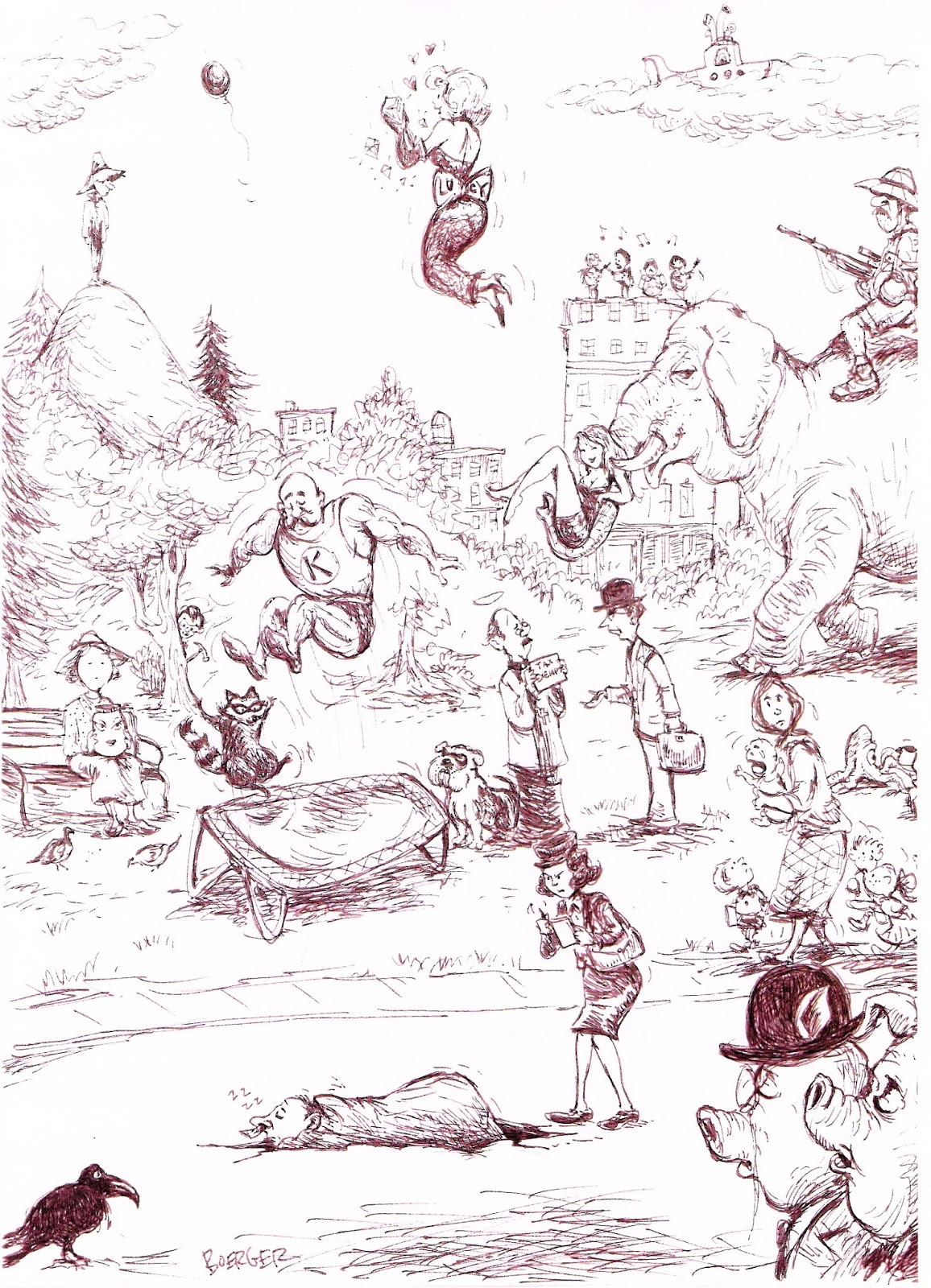
A Day in the Life in Beatlesville


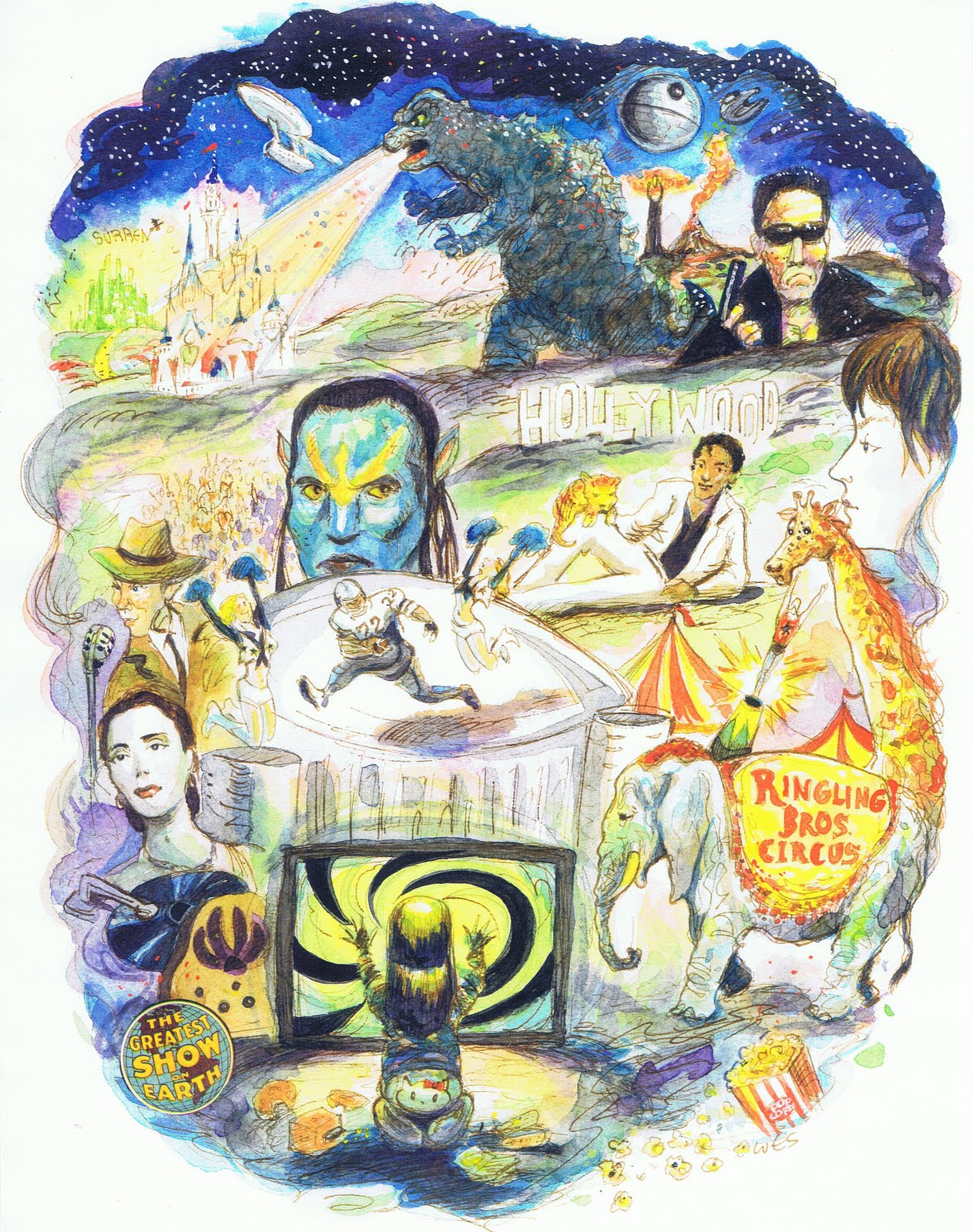
Here we are now, entertain us!
- Nirvana, "Smells Like Teen Spirit"
Just look at Bob and Judy, they're happy as can be
inventing situations, putting them on TV
- Talking Heads, "Found A Job"
About six weeks ago, the world was introduced to its newest superstars. 33 Chilean miners, who would otherwise have passed their entire lives unknown to anyone other than their neighbors and family members (and really, is that so bad?), became trapped in a precious metals mine in the northern part of the country, and instantly became world news. With horror, we learned that the miners were stranded 3 miles below the surface of the earth, and would remain so for anywhere from three to six months. The story, that the world's media purveyors rushed to report on, had it all: heroes - the miners themselves; villains - the heads of the mine company, Empressa Minera San Esteban, which has a shoddy safety record that has resulted in earlier tragedies; suspense, drama, and a setting right out of our scariest nightmares. The world's attention has since moved on, of course, as is its way, although the story of the miners and their ongoing ordeal continues to make headlines in Chile and throughout portions of Latin America. But when their story first made its way onto the airwaves as the-thing-you're-supposed-to-be-fascinated-by-today, and millions of people fixed their attention on it, received updates from breathless reporters and anchormen and women, and contemplated the unimaginable hardship being endured by the new TV stars, I cannot help but muse, ironically, that the thought occurred to many of them, "six months without television? How will they survive?"
In the midst of the real life drama of the miners, the media had an even more compelling subject to consider - itself. Yes, the 62nd Annual Emmy Awards Ceremony was held with much fanfare, as television, for a brief, but yearly, sliver of time had nothing better to entertain us with than its own greatness. Again, audiences had their heroes and villains, along with suspense that reached a crescendo as millions quivered in their chairs awaiting the news that their favorite celebrities, such as Alec Baldwin of 30 Rock, and programs such as Mad Men, had prevailed against worthy, or unworthy, adversaries. With the unearned pride that only a fan can understand, they watched their beaming heroes head for the stage to grab that slender little gold plated angel holding the world, or an atom, or whatever that thing is she's holding, and hoist her proudly into the air. The case of Mad Men, and 30 Rock, are particularly revealing. These are shows about mass media. When one chooses to spend a night of one's life being entertained by rooting for an entertainment program about entertainment,then one is being meta-entertained. And no, I do not think this is a good thing.
As a continually evolving species, perhaps we should now be referred to as "Homo Entertainus". Entertainment, for many, has quite literally become the most important thing in life. I doubt many readers would argue this. I bet we all know at least someone, an elderly aunt or parent perhaps, who turns on the tube first thing in the morning and basically leaves it on until it's time to sleep, to finally give their brains a brief respite from its spell. Their daily schedule revolves around what time shows come on. The only things they seem to enjoy talking about are the programs they watched recently. In all of the long march of human evolution, people like them would have been unthinkable, even unimaginable, up until a very recent period in our history. This is not to put them down, necessarily. I fully understand that for those who are elderly and alone, perhaps unable to get around much, the television and its offerings are nothing less than a savior. I'm just pointing out that, for well over 99% of our existence as a species, such a lifestyle was neither possible nor desirable.
We are vastly, grotesquely over-entertained, no less so than we are overfed, as a nation. Our Ipods are filled with thousands of songs, our computer's memory is filled with movies, TV shows and sports events, our conversations have become flabby with limitless commenting on films, sitcoms, albums, games, etc. It has become such a large part of our lives that we have ceased to ask, if indeed we ever did, what is the point of all this entertainment? How could it possibly have come to play such a large role in our lives? What does it give us that we can't get in some other way? From our own lives, not fantasies?
It's been a long road getting here. Perhaps the modern age of entertainment has as its beginning a date in late 1902, when Enrico Caruso's angelic voice was recorded and made available for distribution. For the first time in history, the world's greatest opera singer could be listened to and appraised without traveling to the theater to see him perform. In that instance, every local singer and musician, from opera diva to Mississippi bluesman, was put on notice. The competition just got stiffer, pal. From now on, you're competing against the best the world has to offer.
Plato, surely one of the greatest thinkers who ever lived, put a lot of thought into the value of art and entertainment. One shudders to think what he would make of the world we live in today. It is like his Republic turned upside down, particularly in terms of entertainment. In his ideal society, plays, musical performances, poetry and pictorial arts were to be strictly censored. They were to show "only the good". Those who created them were to be placed in special colonies outside the metropolis, as their very presence among regular folk was potentially corrupting. Why? First of all, because the very nature of art, as a representation of something, whether an event or a flower, was a further diminishment of the real, the ideal world beyond from which this one arises. A painting of a flower was thus a further removal from reality than the flower itself. Looking at the world around us now, is it not possible to see some wisdom in his apprehension? When people spend as much time talking about their favorite shows with their colleagues at work as they do actually working, when characters in dramas seem as, or more, real to us than the people we share our lives with, have we not perhaps crossed a line the great Athenian warned us about?
Furthermore, according to Plato, art is intrinsically manipulative. Because of the way it entraps our senses, it wields a power, that can be used for good or evil, to influence us. In his age, when poetry and plays were the chief form of entertainment, retellings and enactments of battles could easily have the effect of stirring up uncontrollable, violent passions, such as emotions of rage and desire for revenge. We take this for granted now; in fact much of our entertainment is built upon generating precisely those emotions, even in the entertainment we create for our children. This would have outraged Plato. He was particularly censorious in his attitude as to how children should be introduced and exposed to the arts. Though many would like to reduce Plato to a caricature, an old fuddy duddy who wanted to control people like some small town city council member in the Bible Belt, the reality was that Plato felt threatened by art in the same way that a great Native American hunter would have felt threatened by a grizzly bear. He himself was a poet, and a great lover of music and all arts. Writing as an artist, and a great one at that, he understood its power as well as anyone in The Age of Pericles, and he felt that the place of art and entertainment in one's life should be limited, and its content controlled by discerning folk.
"The Circus is coming to town!" In our hyper-entertained world of today, it is hard for us to imagine the excitement that exclamation generated among young and old in the small towns of Europe and North America, for centuries. For only a few times in one's life, one could be dazzled by the extraordinary skill and strength and bravery of the performers, awestruck at the sight of exotic animals, particularly elephants and giraffes (the "stars" of the animal world during the heyday of the circus industry), and swept up in the spectacle and grandness of the atmosphere. Mothers could be shocked at the costumes the lithe lady acrobats donned, while fathers and sons hid their enthusiasm under pamphlets or boxes of popcorn. When one's life was for the most part a monotonous repetition of the same necessary acts, day in, day out, imagine what an otherworldly diversion these shows must have provided the masses. And today? The circus has been relegated to the furthest fringes of the vast, multi trillion dollar worldwide entertainment industry. Once its sole titan, it now barely registers as a sliver on the Entertainment Market Share pie chart. And to survive at all, it has found it necessary to modernize. The most successful "new circus" in the world today, The Cirque de Soleil of Quebec, has incorporated a story line into its shows, and done away with animals. Where is the shock and awe of seeing an elephant or a giraffe these days, even for children, who can look at them any time they want on their giant TV screens, and can see even more fantastical creatures in movies like Star Wars, Avatar, and the Harry Potter series? And they talk! Though adult viewers were appalled by the Jar Jar Binks character in the 4th Star Wars movie, he (or it) had the kids at hello.
So, what about the 360-odd days of a year that those country bumpkins had to endure when the circus wasn't in town? Were they deprived? Were they like the Chilean miners, trapped in a world of darkness, without stimulation, without color and spectacle? Of course not. They just had to make their own fun. If they wanted to reenact the circus scenes that had so enchanted them, but were without all the "merchandising" of toys, games, dolls, pajamas, costumes, etc. that modern day entertainment events leave in their wake, they had to make their own toys, out of corncobs, buttons, animal hairs, peach pits, whatever their searching hands could come upon, and their fertile minds could synthesize. The adults were okay as well. When work was done and they felt like treating themselves to entertainment, they had music to listen to - their own, in many cases played on instruments fashioned by their own hands. Sure, the singers didn't sing quite as well as Caruso, and the fiddler was no Paganini, but what did that matter? Likely as not, they had never even heard of Paganini, such was the benighted nature of their plight. But in such a case, ignorance is bliss, because without the multi-billion dollar recording industry pointing out to us just how far short of greatness we mere mortals fall, without it serving up Maria Callas and the Beatles to our hungry ears, what difference does it make if the music is awkward and unprofessional? Making friends and neighbors happy is what it's about, right? Or shouldn't it be? The same with sports. Without the entertainment industry turning folks like Joe Montana, Michael Jordan and Tiger Woods into demigods, would folks still have the same incentive to achieve their own, personal best? If anything, even more so, I imagine. Insidiously woven into the world of hyper-entertainment we inhabit today is the message that we, the vast majority of us, are entertainees. Our job is to sit back, absorb, adulate and even worship the output of the well-paid pros who we give large swaths of our lives to.
I readily concede that in a world as fraught with problems as this one is, railing against the entertainment industry, not for its content but for its pervasiveness, must seem to some like a waste of effort. Why go after our diversion, our culture, our escape? Well, in answer all I can say is that I don't feel comfortable about an industry of diversion and escape becoming such a large part of peoples' lives. It robs us of reality, I feel. It violates my personal belief in the adage, "all things in moderation". It dements our perception to the point that all phenomena is on its way to becoming fused, such that politics is entertainment and war is entertainment and sports is war and the circus has reinvented and reasserted itself resulting in our world now being run by clowns who do and say the most outrageous things to get our attention, and daredevils who take tremendous risks with our money. Many people will tell you with pride that they have unplugged their TVs, that they "hardly ever watch television". But if they are still listening to music for hours each day and catching a movie a week, is that really all that different? As I see it, when one is bored, one has three options. One can just accept being bored. This is not so bad. Being bored can be a good thing. It is not an evil to be clobbered by a gigantic octopus of an industry that has a diversion to offer for each moment of our lives. The second is to be an entertainee. Watch something. Listen to something. Read something. I would say that both of these options have their place, and are roughly equal in my estimation in terms of value. I would hope that would be reflected in the amount of time one spends with either choice. The third choice is to me far more interesting and important and valuable. Create something. By yourself or with somebody else. Write a poem to a lover or sing a song to nature. Deposit something into the Bank of Human Creativity; don't just consume that which others have produced. It doesn't have to be great, what you create; in fact, a disservice has been done to you if you have that expectation. A silly little ditty that you take the time to write and sing can be more valuable to your soul by far than listening to Beethoven's Pastoral Symphony for the umpteenth time. I don't think Beethoven would mind, either. He wasn't making music because he wanted to be worshipped long after his death. He made music because it was in him. Just like something is in you, longing to be expressed.

Dylan was cleverer. Hendrix rocked harder. Pink Floyd was weirder. And the Stones were just plain badder! But The Beatles captured the energy of their time better than any of their manifestly talented rivals. With titles such as "Magical Mystery Tour" and "Come Together", they seem to have clearly, almost mystically, understood and embraced their roles as cultural guides through a period of mystery and excitement and wonder. The times were fraught with peril, but The Beatles, accompanied by their animal familiars, were charging out in front, wanting to hold our hands as they guided us on a journey that included herbs, gurus and revolutions.
So, here then, is my tribute to the Fab Four and their four legged (or eight tentacled, etc.) companions. Fans will have fun picking out the songs the critters are culled from, and will also be aware of what is about to befall poor Edgar Allan Poe!
