2012年2月28日火曜日

Missing the Jackpot


"And she'll have fun, fun, fun till her daddy takes the T-Bird away!"
- The Beach Boys

Imagine a product that, if they could afford it, nearly everyone would want to own. Imagine it being so expensive that any company that made it, so long as it managed to cater to the desires of potential customers, would become one of the biggest companies in the world. Imagine that this new product would be of a type such that, to be viable, a slew of new industries and services would have to be invented to support it. Imagine that, as well, some former industries that existed long before this new product was even thought of would become transformed and revolutionized as they fitted their production capacities toward this new product, growing huge themselves alongside it. Imagine that the very environment we humans inhabit would change dramatically, by necessity, as this new product made old notions of communities, towns, cities, even the very notions of "near" and "far" obsolete. Furthermore, imagine that the people who manufactured this product, and worked in all the other industries that serve it, were paid so well that they could afford to satisfy their desires for other products, and that these products also then grew into enormous industries of their own. I think you can easily imagine that this product would have a profound influence on the world's economy. I think it is fair to say that were such a product to arise, within a few short years the bleak economic forecasts of financial meltdown and worldwide economic malaise would be briskly whisked away. I also think you would agree that such a product coming about now, when the world needs it most, is unlikely at best.

The problem, of course, is that such a product did come about, once. However, that happened around 100 years ago. The automobile represents what I call a "Jackpot Industry". With it, the world economy hit the jackpot. Around it grew the oil industry, the steel industry, the rubber industry, the glass industry, etc. The workers at the factories where all of these were produced were able to buy televisions, radios, stereos, etc. It grew cities such as Detroit, Pittsburgh, Akron, Nagoya and Hiroshima. It took two countries, the U.S. and Japan, as well as the already mature economies of Western Europe, to economic heights never seen before, and brought about a new system: an economy not based on lords and serfs, but on a middle class with desires they could now fulfill by virtue of their paychecks.

It is staggering to think what this one product made possible. And yet, as with so many other products invented before the mid 20th century, the automobile began as a plaything, strictly for the enjoyment of the leisure class. It was therefore the vision of Henry Ford - that the very workers who produced it would themselves be able to afford one - that brought this machine among machines into its own. But once that genie was released from its lamp, the world's economy was set on a course of expansion never before seen. And the world changed. Very old industries, such as metal smelting and glassworks, as well as newer industries such as oil, rubber and cement, grew to heights undreamed of as they fitted their technology to serve the demand for automobiles and the roads and bridges to drive them on. Buildings reached new, literal, heights, as working spaces for people traveling great distances to their offices - made possible by cars and highways - resulted in the need for skyscrapers, creating our modern image of what cities look like. Homes filled with consumer goods, supermarkets, fast food restaurants, shopping malls, etc; not to mention freeways and suburbia - none of these things existed before automobiles became a commonplace item, nor could they have.

Tragically, the effects of the automobile industry are as much a litany of global woes as a story of new possibilities. The devastation to the environment wrought by the automobile and its ancillary industries represents a threat to the planet that we are slowly beginning to recognize as existential. What we are also learning is the benefits may be far more ephemeral than we imagined. Whereas most Americans growing up in the Age of the Automobile may have easily deluded themselves that the country's vibrant middle class was the true economic bedrock upon which the nation depended, we have woken up to discover that, to the executives in their gleaming Midtown towers, the middle class was simply a moveable feast. They milked it dry in the U.S., and then began building it up, in Japan, Korea, etc.; with eyes on an even bigger prize: if China and India, which together comprise nearly a third of the world's population, should manage to evolve into western-style consumer cultures, the American middle class can ever after be treated as an afterthought. Which, considering the outsourcing frenzy of corporate America, appears to already be the case.
But even that scenario will not come about as planned, to the chagrin of ruthless executives. The Jackpot Days are over. Supplying India and China with cars for every available driver simply doesn't work. Our environment is already severely wounded, and we are reduced to tearing up mountains and gouging holes into the ocean to squeeze out the last bit of oil that cars need to run on, with ever more disastrous environmental consequences. Electric and hybrid cars won't do the trick. Certainly, making cars that run more efficiently and pollute less should be the top priority of all car companies. But their products still have to be manufactured and shipped. That means tons of steel, plastic, fiberglass, rubber, and all the energy required to produce them. The most recent super freighters, fully loaded, are perhaps the largest and heaviest things ever built by man, and eco-friendly cars will do nothing to unclog shipping lanes.

Likewise, there is no new Jackpot Industry to do for the world economy what the Model T began doing eighty years ago. The internet, mobile phones, ecological and medical technologies, etc., simply do not have the ancillary industrial backing to turn the world's economic downturn around. Some may champion the notion of home robots as a linchpin industry, as the populations of developed countries age and need caring for. This could (and well may) lead to extraordinarily lucrative technological breakthroughs, but cannot possibly create the kind of ripple effects that were the key to the success of the Age of the Automobile. In fact, nothing can. This limited planet cannot withstand another era of unrestrained industrial growth.

That Age is over. Period. The economic protests that are erupting all over the world right now are an entirely predictable consequence of the point we have reached, and a clarion call that bears heeding. Nothing, within our current framework of thinking about economics, commerce, or manufacturing, is going to get us out of the mess we are now in. The benefits of the automobile industry are now in our rearview mirror, and fading fast. We must begin creating deeper and further reaching, non-economic solutions to the numerous problems our world faces.

2012年2月19日日曜日

2012年2月14日火曜日

A Limerick For My Favorite Body Part


Such a beautiful thing is the bottom!
I'm delighted that everyone's got 'em;
though I'm hardly a knave,
and I ALWAYS behave,
it's a challenge at times not to swat 'em!

2012年1月25日水曜日

Ascent


Ascent

The view changed often

as I made my way

from the base of the castle to the top;

the sun beat down on me with ancient fire

and my knees nearly forced me to stop


but each step took me higher than mountains,

and birds

flew beneath me as I crossed a bridge

that led to the door of the highest tower

and the darkness and mysteries within


engraved on its stone walls, a story was told

of a life that knew losses and pain;

it might have been your story; it might have been mine,

for it seemed to reveal everyone's name


the pale orange of sunset glowed through the window

giving eerie life to the stone;

enshrouded by darkness both threatening and comforting

I'd never been so alone


I stepped out onto the perch just as a banshee's wail

sent a chill running through my whole being;

it pierced the air from a far off place,

and I gazed out with awe at the scene:


There was fire in the hills as a crimson moon rose

and a dragon flew across the sky;

it was moving slow, as if it wanted me to know

that I could ride on its back if I tried


I might have died that day, or perhaps it was death that died;

releasing its hold on me

and in one perfect instant, I heard a song

and I'm still haunted by its melody


2012年1月11日水曜日

J, Caco and Friends!

The Golden Cobra Dream


Here is another image I did for my friend, who keeps a dream journal. In this dream, she met a magnificent being, a giant radiant Golden Cobra.

2011年12月31日土曜日

Happy NEW YEAR! 2012!


Happy Year of the Dragon! May this year be a Magical one for you and yours!
- Andy Boerger

2011年11月14日月曜日

2011年9月24日土曜日

Surf's Up!


My latest in the series of Pet Art Portraits, here's Momo and Luna putting their surfing skills on show in Waikiki!


2011年8月13日土曜日

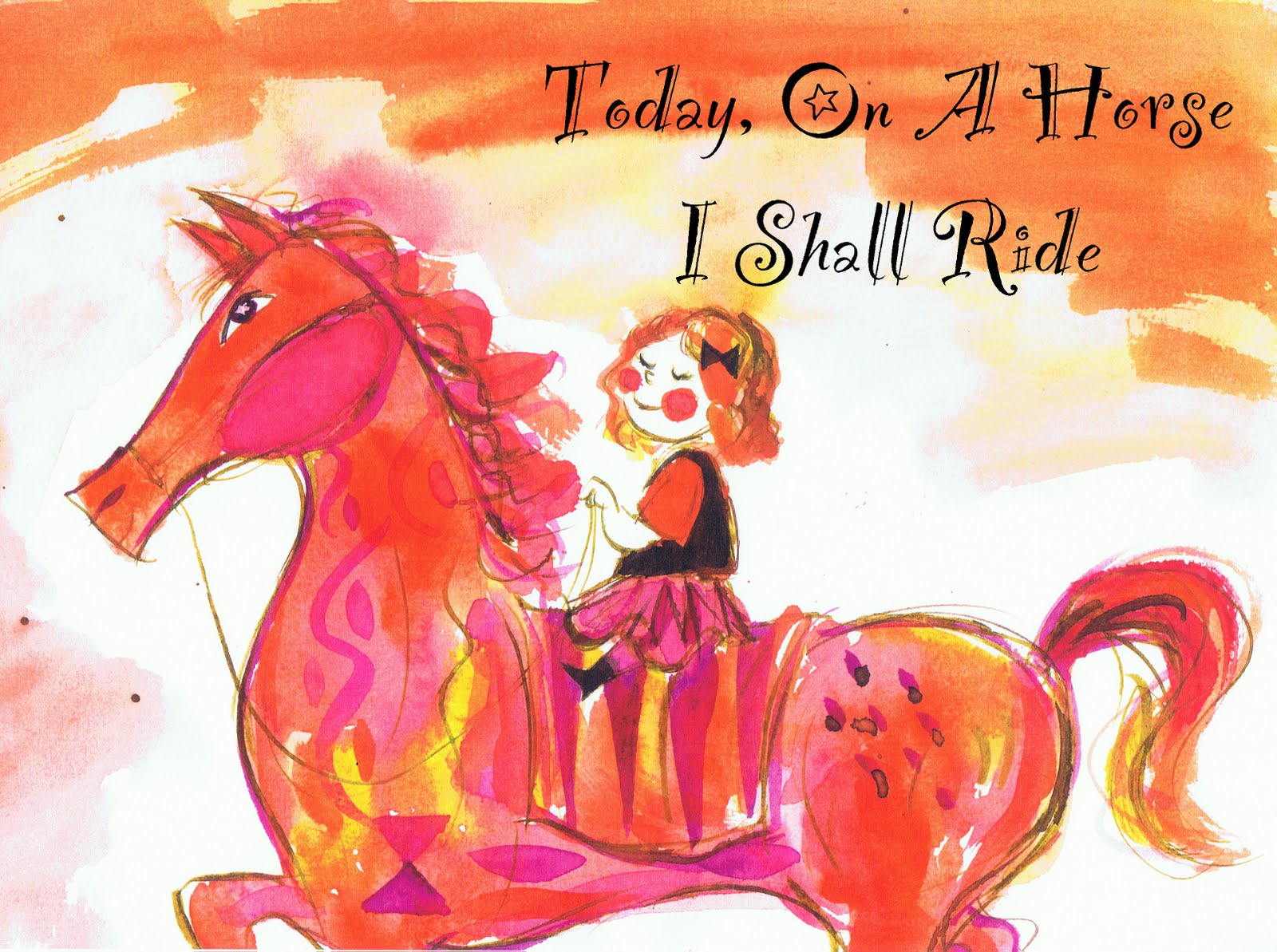
Girl on a Horse

An image from an idea for a children's story I'm working on now.

2011年8月2日火曜日

The Deal That Says "Splunge!"


Remember that Monty Python skit

(and if you don't, it's here: http://www.youtube.com/watch?v=3v0I4OQi7CQ)

where the Texas movie producer gets a bunch of screenwriters in a room and badgers them all until they are reduced to hiding under the table? The Texas producer actually reminds me a lot of the Tea Baggers. But I digress.

Terry Jones is so terrified of getting axed on the spot he shouts out “Splunge”, and then explains that it means that the idea proposed by the producer might be a terrific idea, but possibly not, and he’s not being a yes-man. Quite a word, splunge! Anyway, saves his neck.

So this deal seems to do that. It saves everybody’s neck, it can and must be leveraged to show just what a toxic element the Tea Bagger (aka The Mice That Roared) caucus is, AND it has something for everybody to hate about it, which means it also has something for everybody to LIKE about it. Except the Bagger Caucus, of course, because they are insane.

What’s more, it’s so confusing you can pretty much spin it any old damn way you want.

Personally, I haven’t quite made up my mind about it, splungily, because I have a hard time seeing how this will all play out in the future. It absolutely MUST be played out in a way that exposes the Baggers for the unreasonable folks they are, and makes them radioactive to all but the most Kool Aid slurping RWers come reelection time.

But I’m guessing I probably never WILL make up my mind about it, because I am pretty sure in the meantime, and not too far off, somebody, somewhere will manufacture the NEXT crisis du jour to seize us all by our craniums.
So, Splunge!

2011年7月23日土曜日

Katy and Tiara Get Hitched!


The latest in my series of "Pet Art" commissions, featuring the lovely Katy and the dachshund who has swept her off her feet (with his paws), Tiara.

2011年7月18日月曜日

The Innocence of the Human Body


Where the dogs go on with their doggy life and the torturer’s horse
Scratches its innocent behind on a tree.
- Auden

St Francis of Assissi had, to be sure, an odd relationship with his body. As a strict ascetic, he considered it of utmost importance not to give in to its cravings for pleasure and leisure. He dubbed his own body “brother ass” and felt that it should be treated as any other domestic beast of the time. Beaten when in need of discipline, and given only coarse food upon which to subsist. He was known to curb his temptations by hurling his body into snow, or even on one occasion a briar patch which he tossed himself about in until his flesh was ripped and bleeding. However, by the time of his death, the great man had reconsidered his ill treatment of his body – his earthly vehicle – and asked the Lord to pardon him for having treated Brother Ass so cruelly. He realized that he had been indulging a fascination; an attempt to conquer that which his Creator had given him. Finally, it seems, that he who loved life and all its manifestations, had finally learned to love, or at least honor, his own organism.

Although many may feel that Francis’ relationship to his body was downright bizarre, I think it is difficult to escape the conclusion that we, in our modern age, relate to our own bodies in even more dysfunctional ways, or at least are encouraged to. We obsess over its skin layer, its most superficial aspect. Say the word “body” to a teenage male, and no doubt the image that will result is a female with Playboy-approved proportions. Or perhaps his own body, “ripped” and sculpted. It is doubtful that he will think of the intricate, mechanical wonder he inhabits, the magnificence that goes far beyond the skin layer. I’m reminded of a scuba diver, who, seated next to a friend who looked out at the ocean at sunrise and remarked at how beautiful it was, replied, “yes, and that’s only theroof!”

We indulge our bodies in exactly the way that St. Francis frowned upon, as we load up on ice cream, tortilla chips, cola, coffee and red wine. We then scan it for signs of resultant flab, and hold it up for critique alongside the impossible ideals that mass media relentlessly parades before our eyes. In magazine articles and website pages we are asked to consider which Hollywood hunk or starlet has “the best body”, when presumably the correct answer should be the one that functions best – the one that digests, eliminates, breathes, repairs, etc. most efficiently.

No greater indication of our dysfunctional relationship to our bodies can there be than the fact that we have created a trillion dollar industry that has as its sole purpose the manufacture of machines and devices that destroy and disfigure it by the millions. Our so-callled “defense industry” would perhaps be looked upon less favorably by its supporters if it were referred to, more honestly, as “the body destroying industry”. Although it has numerous competitors, perhaps the most atrocious and obscene example of this in all our sad history was the Treblinka II Death Camp in Nazi Germany. This was the Industrial Revolution meets Dante’s Inferno. For the first and only time in history an actual factory was built, with train lines leading up to it, that served no purpose other than the destruction of human bodies as quickly and “efficiently” as possible. People were carted in by the train car-load, and few lived more than 24 hours after arriving.

And these bodies that we waste and destroy so casually are near miraculous machines that are far beyond the capabilities of our greatest scientific geniuses to create or even imitate. Each cell, when it is first birthed in us, is like any other cell in our bodies, yet each knows how to evolve through exactly the right iterations so that it becomes part of our hair, our eyes, our lungs, our genitals, etc. How do the cells do this? Nobody knows, but it is likely the answer will someday be found in the portion of our DNA that biologists have lovingly referred to as “junk”.

We punish bodies mercilessly, and yet throughout the history of our species they have never sinned in any way. They serve us faithfully to the fullest extent they are capable at any given moment, until they can no longer. When they long for sleep we deprive them of it. When they need healthy natural food to stay strong, we insist that they make do on starchy, sugary, salty substances they have little use for. We keep them chained to chairs when they long to move about in the open air, as they were evolved to do. If we treated our pets the same way we treat our bodies we would be considered negligent, at best. And we punish bodies for the transgressions of the mind. I am opposed to the death penalty because I believe it is always a miscarriage of justice, as the body merely did what it was told, no matter how heinous the crime. To the body, slicing a cucumber or slicing into a human finger is essentially the same act, insofar as it merely follows the instructions of a healthy, or deranged, mind. An eye for an eye is thus two outrages, not one.

I am only writing to say that human bodies are innocent. We have yet, as a species, to demonstrate our worthiness to inhabit them. We should never harm them in any way.

2011年7月11日月曜日

Atlas Buzzed

While scientists remain puzzled as to the cause of the dramatic decline in honeybee populations in North America and elsewhere, some are speculating the cause may very much be human related; however, not technological, but philosophical. It appears that “Randism”, a trend that has recently exploded on the American political landscape may similarly have caught on among our bee brethren. It seems that the reason for the decline of hive populations is that many bees are now practicing “the virtue of selfishness”, keeping the nectar they collect for themselves and not returning to the hives they emerged from. These bees consider the notion that they should return for the benefit of the whole colony “evil altruism” and look down upon the “Hive-ists” who would act for a goal larger than themselves. They argue that “there is no such thing as a species” and that it all comes down to individual bees and their pursuit of their own happiness. When it is pointed out to them that this could result in the extinction of honey bees and have cataclysmic results on worldwide crops, they scoff and say, “and this is my problem how?”

Meanwhile, more religious-minded bees are concerned about how to carry on in the aftermath of what they regard as “The Great Rapture” that has decimated their populations. “Left Bee-hive”, the bee adaptation of the “Left Behind” series of books by Tim LaHaye and Jerry Jenkins, paints a bleak picture of life on earth after the Chosen Bees have been taken up to their Maker.

So, will it be Rand that the bees turn to, or the Good Book? “Why should I care?”, a distraught bee who agreed to be interviewed for this article lamented. “It’s so hopeless that I just may go off somewhere and sting someone!”